How to Wheelie (Grau) in Street Wheelie Brasil
Realistic balance, throttle discipline, and practice loops that turn panic flips into clean street holds.
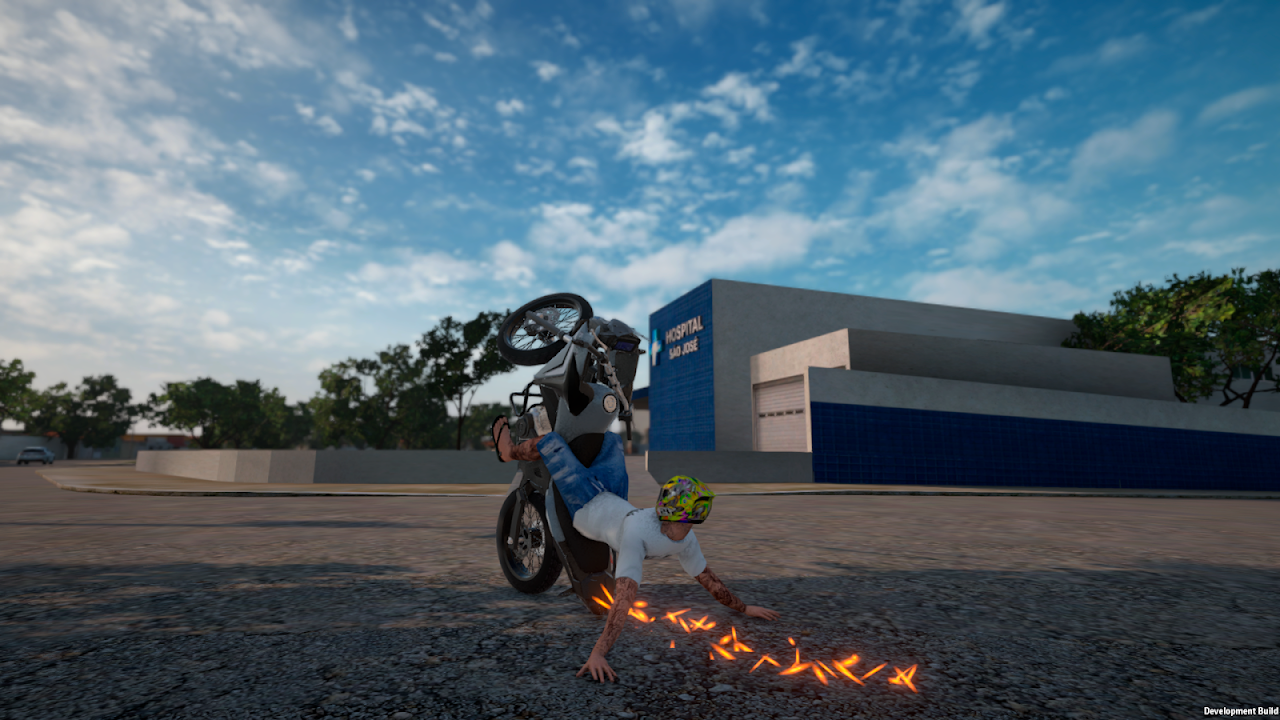
Grau—the long, controlled wheelie—is the heart of Street Wheelie Brasil. Villa Games Group built the ride around realistic wheelie physics, so success feels earned: weight transfer, throttle timing, and small corrections matter more than raw speed. This guide teaches you how to lift cleanly, find the sweet spot, hold a line, and recover when the nose climbs too high—without filler tips that ignore the mobile control surface.
If you have not finished onboarding yet, skim Getting Started first. If inputs feel slippery, fix layout and sensitivity in Controls before blaming the physics. Bike choice and parts influence how forgiving the sweet spot feels; cross-check the Tier List Hub once you understand the technique.
The balance idea in plain language
A wheelie is a fight between gravity pulling the front down and torque plus posture pushing the front up. In Street Wheelie Brasil that fight is continuous:
- Too little throttle or too much forward lean → front drops early.
- Too much throttle or late correction → loop-out / flip.
- The sweet spot is a narrow band where the front hangs in the air while you still have steering authority and forward motion.
Your job is not to mash accelerate. Your job is to enter the band with a decisive lift, then micro-manage with taps and brief releases so you stay inside it. Think of throttle as a dimmer, not a light switch.
Step-by-step: first clean grau
- Build a little speed on flat ground. Standing starts that yank the bars skyward teach panic, not control.
- Initiate the lift with a clear throttle input (and whatever lean/wheelie assist the control scheme uses—see Controls). Commit; timid half-lifts teach nothing.
- Immediately soften the throttle as the front rises. The mistake beginners make is holding 100% after the lift succeeds.
- Hunt the sweet spot with short taps. If the horizon climbs toward loop-out, release or tap brake/forward correction. If the front sags, add a light tap—not a full twist.
- Steer with tiny inputs. Big left-right swings while balanced multiply instability.
- Set down on purpose. Practice ending the wheelie cleanly so landings become a skill, not an accident.
Repeat in 20–40 second bursts. Long failed attempts reinforce bad timing; short intentional reps build muscle memory.
Throttle taps and the sweet spot
On mobile, your thumb is coarser than a twist grip, so rhythm beats raw precision:
- Use pulses: tap–pause–tap rather than a continuous hold.
- Match pulse size to bike power. Stronger machines need smaller taps once airborne.
- Listen as well as watch. Realistic engine sounds—highlighted in official gameplay with authentic audio—give feedback when revs spike before the visual catch-up. Use the mid-article video as a reference for how the bike should “talk” under load.
- When you find the band where the front stays up with almost no input, freeze your habits. That quiet zone is the sweet spot; protect it.
If every pulse flips you, your entry speed is too high or your first tap after lift is too fat. Slow the approach, lift, then wait a half-beat before the first correction.
Practice routes that forgive mistakes
Train where consequences are low:
- Long, straight, low-traffic stretches beat downtown chaos.
- Slight downhill can help hold a wheelie but teaches bad habits if overused—alternate with flat ground.
- Avoid tight alleys until you can correct without walls.
- After a crash, reset calmly; tilt-spam mid-ragdoll teaches nothing.
Once flat holds feel stable, add gentle curves. Steering while balanced is the bridge between parking-lot grau and real street flow. Later, layer customization and power parts from Customization so you learn how exhaust and setup change the feel—not before basics exist.
Common mistakes (and fixes)
| Mistake | What you see | Fix |
|---|---|---|
| Holding full throttle after lift | Instant loop-out | Soften immediately; pulse |
| Giant steering swings | Oscillation then crash | Micro-steer only |
| Practicing only in traffic | Panic corrections | Flat empty roads first |
| Blaming “broken physics” | Inconsistent results | Recheck Controls sensitivity |
| Buying max power too early | Narrower sweet spot | Skill first; then Tier List Hub |
| Never practicing set-downs | Scary landings | End wheelies on purpose |
Progress checklist
You are ready to move on when you can: lift on command, hold several seconds with taps, steer mildly without dropping, and set down without bouncing into a second crash. Then earn upgrades via Jobs and Money, refine identity in Customization, and take cleaner lines into Online Multiplayer sessions.
Grau in Street Wheelie Brasil is a Brazilian street fantasy grounded in patience. Respect the sweet spot, trust small inputs, and let every short practice block compound. The players who look effortless online are usually the ones who logged quiet flat-road reps when nobody was watching.
Frequently Asked Questions
Quick answers for Street Wheelie Brasil players.
Why do I flip as soon as the front lifts?
You are likely holding full throttle after the lift. Soften immediately and use short taps to stay in the sweet spot.
Should I learn wheelies before customization?
Yes. Learn stable grau first, then use Customization and the Tier List Hub so parts enhance skill instead of masking bad timing.
Do controls affect wheelie difficulty?
Heavily. Wrong sensitivity or camera makes corrections late. Calibrate in the Controls guide before long practice sessions.
What is the best place to practice?
Flat, open, low-traffic roads. Add curves only after you can hold and set down cleanly on straights.
Is there a video that shows realistic engine feel?
Yes—this page embeds official gameplay focused on realistic engine sounds so you can match audio cues to throttle discipline.